Rugby is a fast-paced team sport played with an oval ball. Players score points by carrying the ball across the opponent's try line and touching the ball down (a "try") or by kicking it through the uprights (or in rookie rugby, kicking it to a teammate to catch). What makes rugby special is its culture of respect — players call the referee "Sir" or "Ma'am," teams shake hands before and after every game, and opponents often share a meal together after a match.
Learn about professional leagues, international competitions, how to stream rugby, and more.
How to Watch & Follow Rugby →A non-contact version where players carry flags on their hips. Instead of tackling, defenders pull the flag to stop the ball carrier. The offense gets 7 attempts to score. If flags are pulled 7 times, its a turnover.
A structured introduction to contact rugby with simplified rules and emphasis on safe technique. Players wear mouthguards and learn proper body position.
7-a-side rugby with all the traditional rules. Players are coached in modified scrums, lineouts, and all the skills of the full game.
Rugby or soccer cleats (no metal studs for U6–U11)
Required for U12 and up; encouraged for all ages
Hydration is key — games can be intense!
Team jerseys are ordered through the club. Visit the jersey page →
There are two main forms of rugby: Rugby Union and Rugby 7s (we don't play Rugby League). Rugby Union is 15-on-15, played over two 40-minute halves for an 80-minute game — typically one match per week on Saturdays. Rugby 7s is 7-on-7 with 7-minute halves, played tournament-style over a day or a full weekend. When a player subs out, they cannot return to the game.
Our U6–U11 teams play a version of 7s (7 players to a side, 7 minute halves) — but with flag pulling instead of tackling, and without rucks, scrums, lineouts, penalty kicks, goal-kick conversions, or drop goals. Players can sub in and out unlimited times.
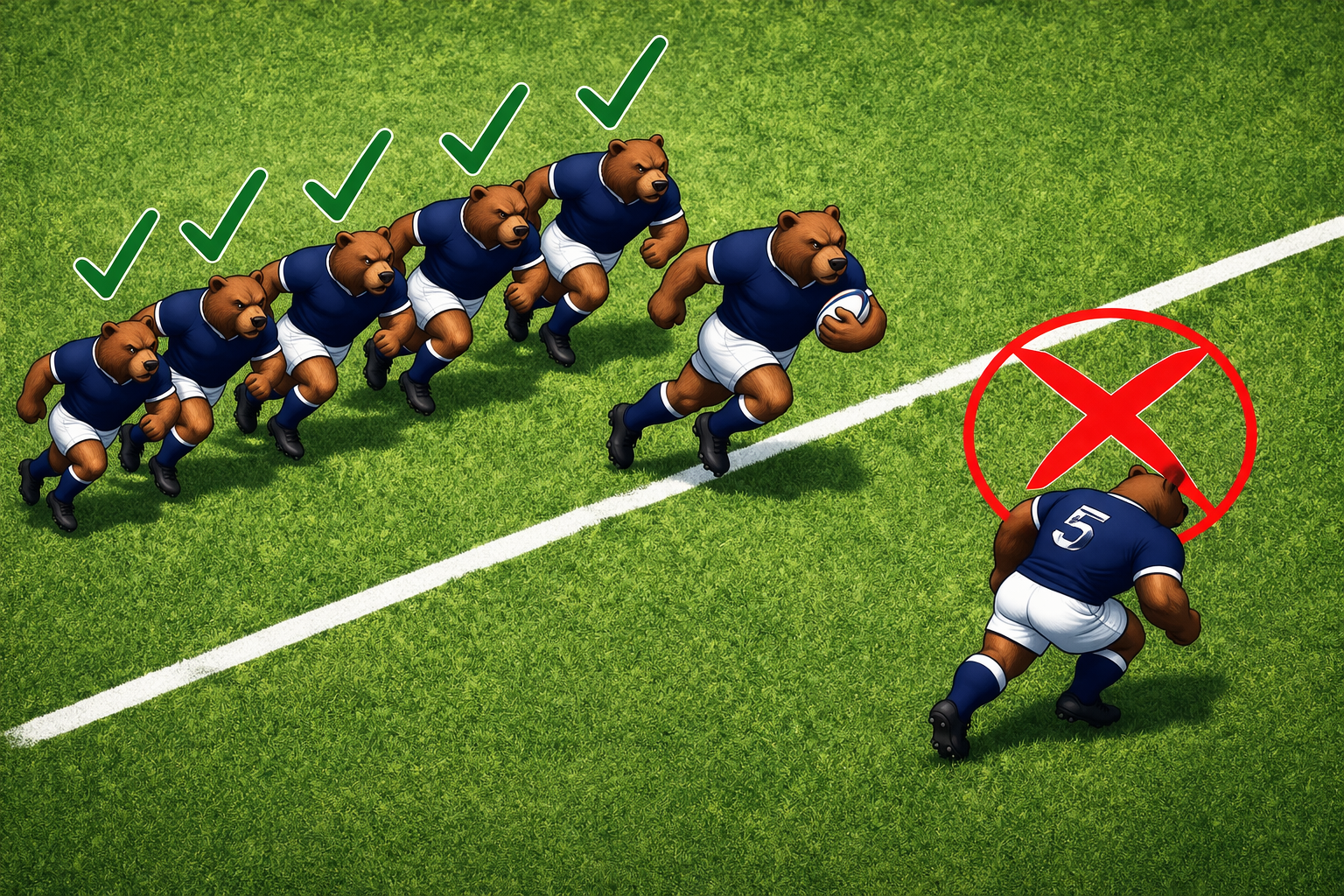
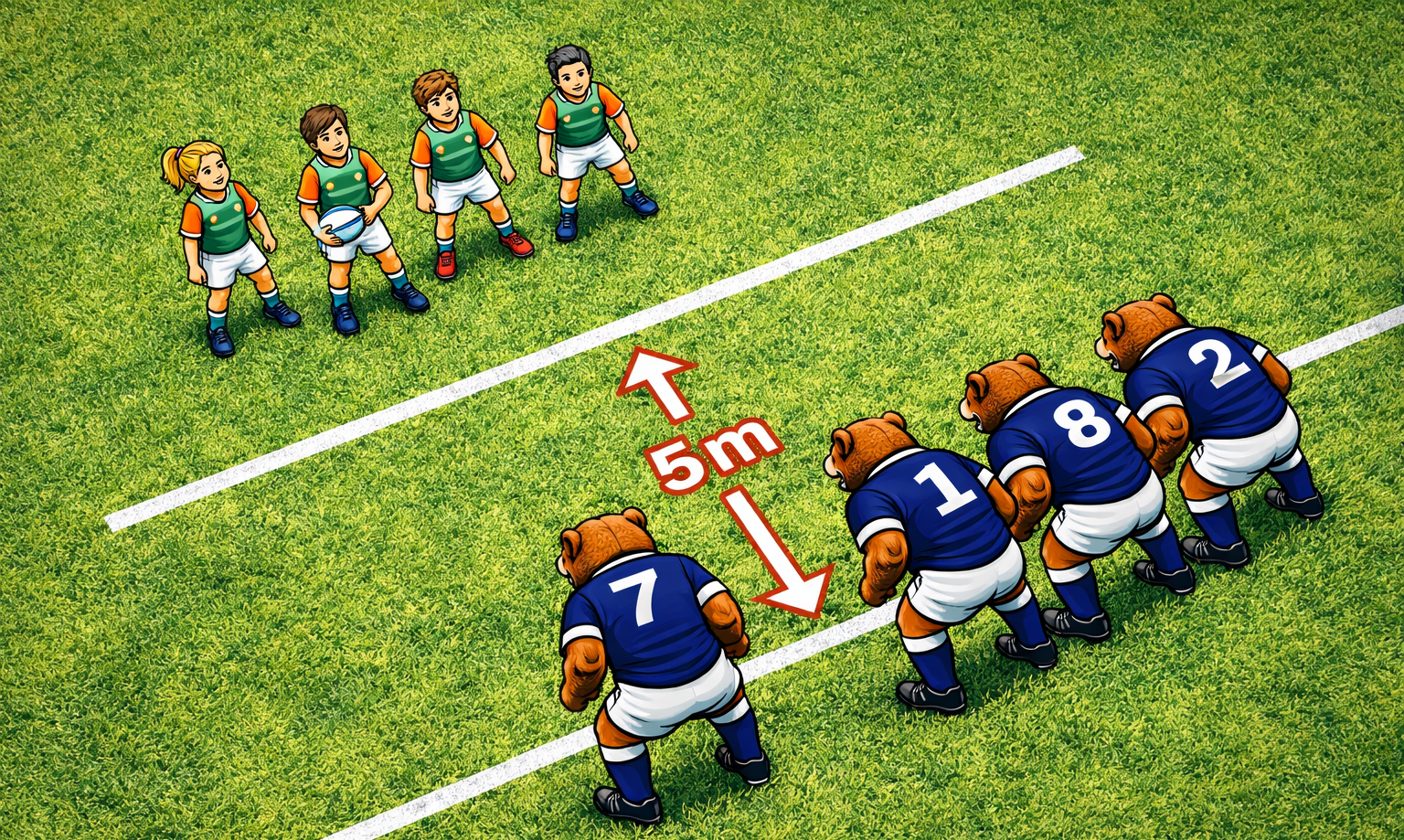
Every flag pull is a "tackle", offense gets seven attempts to score. Flag guarding counts as a tackle. If a defensive player is offisides, the offense gets a fresh seven" attempts to score.
Knock-ons are a turnover, except on kick-offs.
Starting at U12, offense continues to play until they score or turn the ball over.
A parent, coach, or older rugby player serves as the scrum half for the players. After a flag pull, the scrum half retrieves the ball and passes it to restart the offense.
Players run their own scrum half. After a flag pull, the designated scrum half retrieves the ball from the "tackled" player and passes to restart play — the scrum half cannot run the ball until after that first pass is made.
Players step into modified tackle rugby. However, there are still no rucks, scrums, lineouts, penalty kicks, goal-kick conversions, or drop goals.
Players continue modified tackle. Modified scrums, rucks, and lineouts are added.
The primary way to score in rugby. A player touches the ball down beyond the opponent's try line. Worth 5 points.
The player who retrieves the ball from a tackle or breakdown and passes it to a teammate to restart the offense. The link between forwards and backs.
When a player drops the ball or hits it forward with their hand or arm. Results in a turnover of possession to the other team.
When the ball or the ball-carrier crosses the sideline. Play stops and is restarted with a lineout or tap kick from the sideline. In rookie rugby, its a turnover.
Passing the ball in the direction of the opponent's try line. This is illegal in rugby — the ball must always be passed sideways or backward.
The moment after a tackle when the ball is on the ground and both teams contest for possession. Players must stay on their feet and bind legally.
A set piece used to restart play after minor infractions. Eight forwards from each team bind together and push against each other while the scrum-half feeds the ball into the middle.
Formed at the breakdown when one or more players from each team are on their feet and in contact over the ball on the ground. The ball must be played with the feet — no hands allowed.
A kick at goal awarded after scoring a try. The kicker kicks the ball through the uprights from a line perpendicular to where the try was scored. Worth 2 bonus points.